Printable Indoor Activity Checklist for Calm, Creative Kids
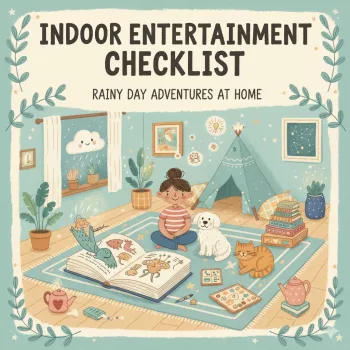
Indoor Entertainment Checklist for Kids: A Printable Plan for Calm, Creative Days at Home
Indoor days can feel long when kids have energy to burn and attention spans that change by the minute. A simple checklist turns “What should we do now?” into a steady flow of age-appropriate options—mixing movement, creativity, learning, and quiet time—so children stay engaged and caregivers stay sane.
Why a checklist works better than a single activity idea
A single “perfect” activity rarely lasts as long as you hope. A checklist, on the other hand, gives you a flexible menu that meets kids where they are—without restarting the planning process every 20 minutes.
- Reduces decision fatigue: ready-to-go options for different moods (active, calm, social, solo) keep the day moving.
- Balances the day naturally: movement, creativity, problem-solving, and rest all get a place.
- Builds independence: kids can choose and complete items they’re capable of managing on their own.
- Smooths transitions: predictable routines and small “wins” make it easier to shift from one block to the next.
What’s inside the Indoor Entertainment Checklist (printable digital download)
The Indoor Entertainment Checklist for Kids (printable digital download) is designed for real homes: small spaces, mixed ages, and days when you need kids to stay busy without constant negotiation.
- A mix of quick-start activities and longer projects that work indoors.
- Options that scale for toddlers, preschoolers, elementary kids, and mixed-age siblings.
- Prompts that encourage creativity, problem-solving, and life skills—not just screen-based fillers.
- A simple format that can be printed, laminated, or used digitally on a tablet.
Easy ways to use a digital checklist at home
| Setup | Best for | Tip |
|---|---|---|
| Print and post on the fridge | Daily routines | Use a marker or stickers to check off completed items |
| Slip into a binder or clipboard | Multiple kids | Assign each child a color for their checkmarks |
| Laminate and use a dry-erase marker | Repeat use | Wipe clean weekly and rotate favorites |
| Open on a tablet or laptop | Travel and small homes | Let kids pick 2–3 items per block of time |
A simple indoor day framework (morning, midday, afternoon, evening)
If indoor time feels chaotic, use a gentle rhythm that repeats. Kids don’t need a strict schedule—just a pattern they can predict.
- Morning: start with a movement burst (5–15 minutes) to reset energy and attention.
- Midday: choose a focused project (craft, build, kitchen helper task) that produces something tangible.
- Afternoon: add a learning game or puzzle, plus a social activity if siblings or friends are around.
- Evening: prioritize calm activities (reading nook, drawing, audiobooks) to support bedtime routines.
Play supports developing brains and builds skills kids use later for learning and relationships. For a deeper look at why play matters, see Harvard’s research on play and learning at Harvard University Center on the Developing Child.
Indoor activities by age (fast picks that actually work)
Toddlers (1–3)
- Sensory bins using household items (dry pasta, big pom-poms, measuring cups).
- Dance-and-freeze games.
- Color sorting with safe, oversized objects.
- Picture-book scavenger hunts (“Find a dog on this page!”).
Preschoolers (3–5)
Early elementary (6–8)
Older kids (9–12)
Mix-and-match activity categories to prevent boredom
Quick pairings that keep kids engaged longer
| If the mood is… | Start with… | Then follow with… |
|---|---|---|
| Restless | 5-minute movement game | Build challenge (blocks/LEGO/cards) |
| Overstimulated | Quiet reset (reading or coloring) | Simple craft with clear steps |
| Bored and picky | Choice of 2 activities | Scavenger hunt with a small “prize” |
| Sibling conflict | Parallel play stations | Co-op game or shared goal challenge |
Make it stick: simple rules that keep indoor time peaceful
For age-based expectations that can help you choose activities that fit your child’s stage, the CDC’s parenting tips are a helpful reference: CDC: Child Development (Positive Parenting Tips).
Screen time without battles: a checklist-friendly approach
For guidance on healthy media habits, see American Academy of Pediatrics: Media and Children.
Print, prep, and store: a 10-minute setup for smoother indoor days
If you’re setting up a dedicated “create corner,” a simple desk organizer can help keep supplies contained. The Cute Ceramic Tulip Pen Holder is an easy way to store markers, pencils, and scissors where kids can reach them.
A ready-to-use printable for busy days
When weather, illness, or packed schedules keep everyone inside, a reusable plan saves time and lowers stress. The Indoor Entertainment Checklist for Kids (printable digital download) works well for families with multiple ages—kids can choose different items while sharing the same routine.
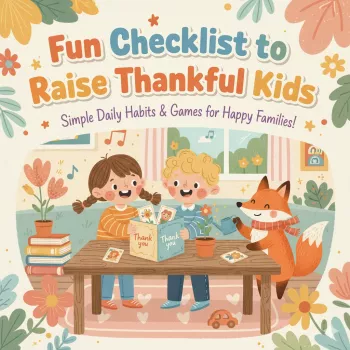
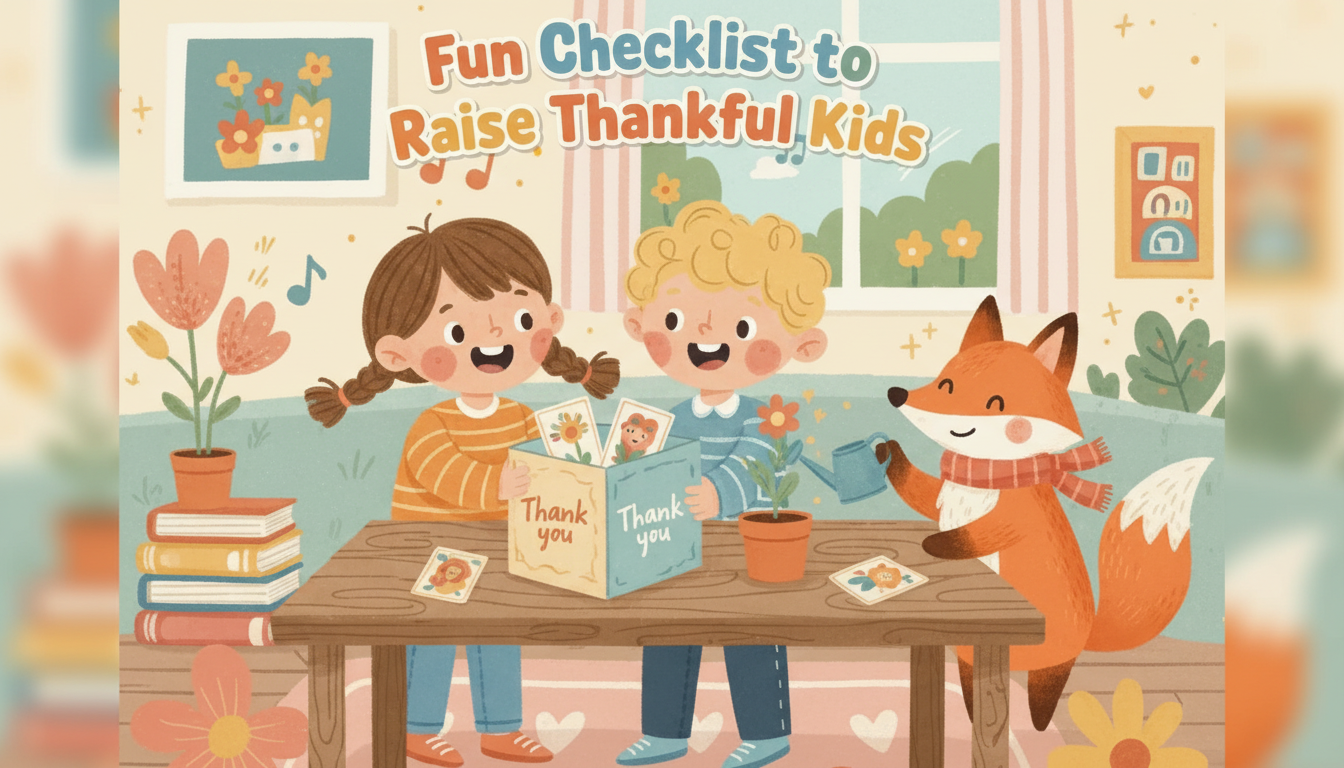
To add a “character and kindness” layer to your indoor routine, pair it with the Fun Checklist to Raise Thankful Kids (printable digital download) and include one quick gratitude action during your quiet reset block.
FAQ
What ages is the indoor entertainment checklist best for?
It works well for toddlers through preteens, with activities that can be simplified for younger kids and expanded for older kids. Younger children may need help choosing, while older kids can use it more independently—especially in mixed-age households.
How do you use a printable checklist without creating more mess?
Use a few labeled activity bins and limit what comes out at one time (for example, one craft tray and one building bin). Set a short cleanup timer at the end of each block, and plan just one “messy” activity per day paired with a clear cleanup step.
Can this be used as a routine for homeschooling or quiet time?
Yes—try a repeating block like movement, a learning game, a creative project, then a quiet reset. Kids can check off each block as they finish, which makes transitions calmer and helps them see progress without constant reminders.








Leave a comment